

Sanctuary: Durable Not Just Decorative
For a while now I have been in the process of writing a book about sanctuary.
The writing has become much more than just organizing ideas, and has forced me into examining, with fresh eyes, what sanctuary really is. Not only how we create it around us, but how we establish it within ourselves.
Because that is the goal, right? Creating a space of sanctuary inside us that is impenetrable by the chaos of the world and our changing circumstances.
This is the point where sanctuary becomes truly useful and impactful in our lives.
But how do we actually get to that place? How do we establish that inner space of balance, peace and harmony? And how do we do it in a way that is permanent and unshakeable?
For years, I have researched sanctuary through the lens of design. I believe that the places we inhabit shape the way we experience the world. Thoughtful interior environments can calm our nervous system, encourage meaningful habits, and create the conditions for a life that is more fulfilling.
But I'm realizing more and more that beautiful spaces are only one part of sanctuary. They are a way in.
They are like a doorway or a portal, inviting us to travel from the outside world to our inner world: that inner space of sanctuary that we all have the potential to carry inside us.
Is it really that easy?
I say, yes.
I do think we like to complicate things and if you’re anything like me, when something sounds overwhelming or confusing or mysterious, I sometimes tune out. While I might think it sounds interesting, I decide that it’s not obtainable for me.
But what I’m sharing is obtainable by every single one of us. And it’s deceptively simple.
Because this is where sanctuary becomes durable, rather than just decorative.
The environments we create around us can support our bodies and even quiet our minds when designed and organized properly, but their greatest purpose is served when they become an entrance to the deepest parts of ourselves.
They create the opportunity for us to reconnect with the essence of who we are, and to return to a steadier version of ourselves.
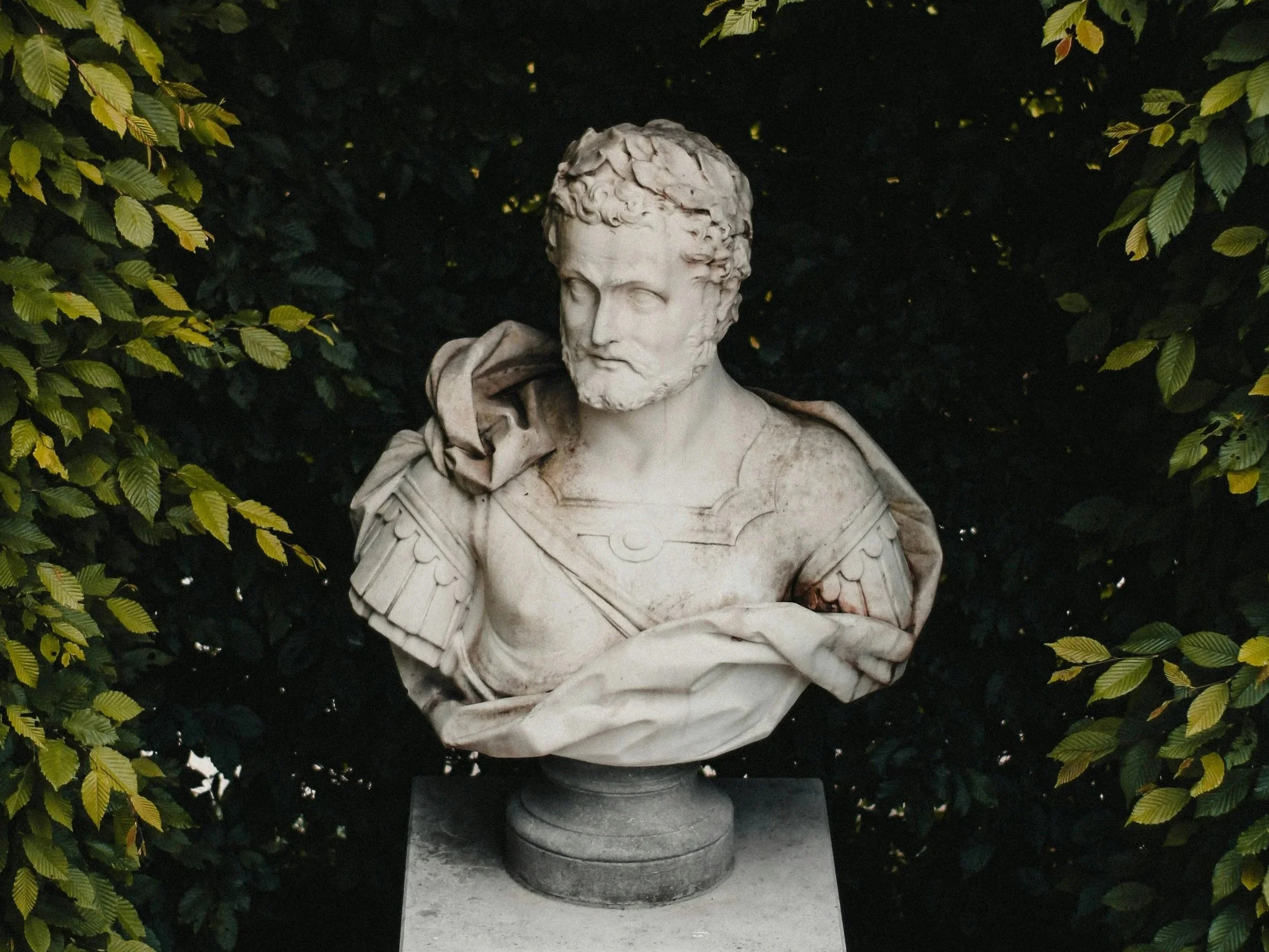
The Stoics (Marcus Aurelius is my oldest crush) had a name for this place within us: they called it the inner citadel. You have to admit, that is a fabulous phrase. It sounds exactly like what it is: an inner fortress built not with physical walls, but from the bedrock of our values, our beliefs and our character.
I love this idea because it reminds me that while our surroundings can help us reach this place, they cannot build it for us. We have to build it for ourselves.
For me, this process has required asking difficult questions. Am I living in a way that feels true to who I am? Am I making decisions out of fear and anxiety, or simply reacting to whatever is thrown at me? Am I building a life that reflects my values? Am I living with purpose and doing the things I am in this world to do?
These are big questions. But they are important questions. Ones that are hard to consider when I’m distracted by social media, the news and the noisy world around me.
And this is why, for me, my space of sanctuary (both without and within) is mission critical. I can’t actually hear any of the answers when I’m distracted and sprinting through my days.
Please note: I still experience plenty of sprinting and distraction. But my sanctuary provides an antidote to the anxiety and craziness.
It makes me pause.
It makes me stop.
It makes me remember to breathe.
(I think I just felt you exhale along with me).
What I've come to understand is that awareness of our reactions to the world around us isn't enough. Creating a sanctuary space, a container to hold our bodies, our minds and our spirits is a great next step, but also not enough. Not if we want an inner stability that isn't dependent on everything going right.
So much of the security (and happiness) we experience is borrowed from our circumstances: from life unfolding (at least for a minute) according to plan, from receiving (even momentary) approval from others, from the stability of our normal routine. And it feels solid until something inevitably changes.
The steadiness I'm learning to value is different.
It comes from knowing who I am and understanding what I believe. Knowing this allows me to return to those principles when life becomes uncertain. It doesn't remove hardship, but it changes how I respond to it. And empowers me in the process.
It’s teaching me that I can trust myself.
I can trust myself to figure it out. I can trust myself to respond to difficult situations and conversations in a way I won’t regret later. I can trust that everything is going to work out.
I've noticed that when I respond from this place of assurance and trust rather than fear, life feels different.
It feels better.
And it’s not because my circumstances are suddenly perfect, but because I am no longer waiting for them to be. My sense of peace is no longer entirely dependent on what is happening around me. My peace, my balance, my sense of harmony lives inside me.
It is unchanging. It is unflinching.
Perhaps that's what sanctuary has been trying to teach me all along.
The homes and spaces we design matter. The beauty we surround ourselves with matters. They have the remarkable ability to soften us, restore us, and invite us back to ourselves. But I’m finding that their deepest purpose is to create the quiet place where we can do the inner work that no room, no object, and no designer can do for us.
That is the difference between a sanctuary we visit and a sanctuary we become.
One offers comfort, while the other creates resilience.
And when the spaces around us support the steadiness we've built within us, that's where sanctuary becomes something lasting: when peace around truly inspires peace within.
Sanctuary is no longer simply shelter from the storm. It's the inner citadel built with a kind of steadiness that no storm can interrupt.
How does this resonate with you? I’d love to hear. Drop me a note or a comment.
With love and gratitude,
Lisa