

Your Brain, Art and Sanctuary
For as long as I can remember, I have believed that the spaces we inhabit did something to us — not just around us, but to us. That beauty is not decoration. That sanctuary is not luxury. This is because the environments we create and choose and dwell within shape us at a level far deeper than comfort or aesthetics.
I've built an entire design philosophy — Finding Sanctuary — on that conviction.
And now, science is catching up. AT LAST!
When I discovered the work of Susan Magsamen and Ivy Ross, something clicked into place. Their 2023 book, Your Brain on Art: How the Arts Transform Us, is one of the most important works I've read in years — not because it told me something new, but because it gave rigorous, evidence-based language to something I've known intuitively my entire career.
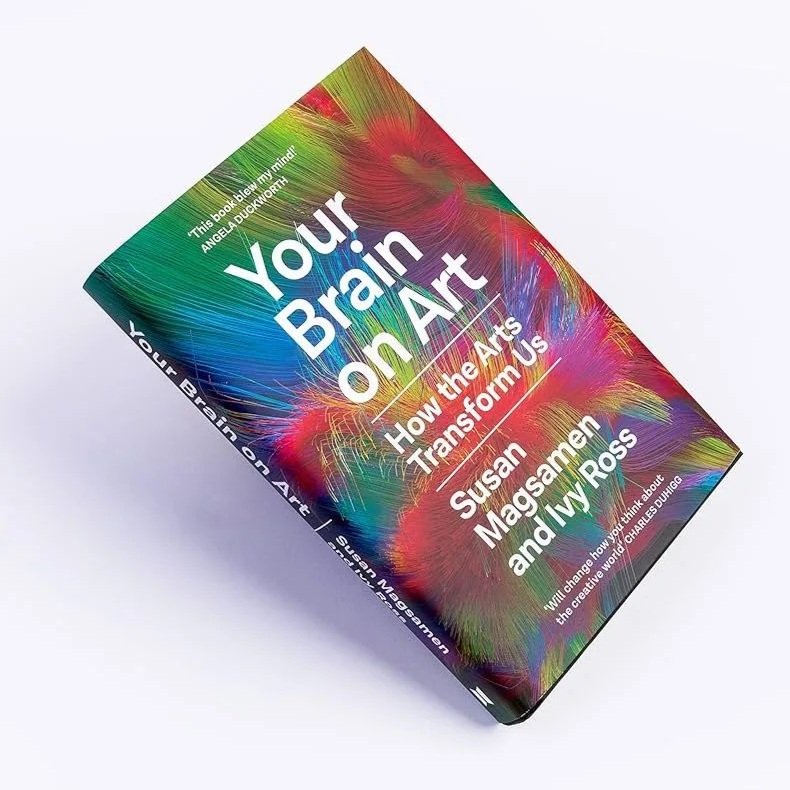
Magsamen is the founder and director of the International Arts + Mind Lab at Johns Hopkins University School of Medicine. Ross is VP of Hardware Design at Google. Together, they represent exactly the kind of cross-disciplinary thinking that changes how we see the world: hard science and lived creative practice, in conversation.
Their book makes a bold, beautifully documented argument: engaging with art is not a luxury or a pastime. It is a biological necessity.
What the Science Actually Says
The field Magsamen and Ross bring to light is called neuroaesthetics: the scientific study of how art, beauty, and aesthetic experience affect the brain and body. What researchers in this field are discovering is staggering:
Engaging with art measurably reduces cortisol, the hormone that causes us to feel stress
Creative expression can strengthen the immune response
Aesthetic environments rewire neural pathways, affecting how we think, feel, and process the world
Beauty and awe are not just emotional — they are neurological events with real, measurable physiological signatures
The arts show documented results in treating depression, chronic pain, trauma, and dementia
This is not a metaphor. This is biology.
Where Finding Sanctuary Lives in This Science
When I read Your Brain on Art, I found our philosophy on nearly every page.
Finding Sanctuary has always been about the body, not just the eye.
When I design a space, I'm not asking "does this look beautiful?" I'm asking "how will it feel to live here?" How will the light in the morning affect your mood before you've had your first cup of coffee? What will the texture of that fabric do to your nervous system at the end of a hard day? How will the proportions of this room make your shoulders drop and relax?
I take a deep breath just thinking about this.
Magsamen and Ross confirm what I have suspected: those questions are neurological, not aesthetic. We are not decorating rooms. We are curating experiences that change the brain.
Finding Sanctuary is about awe as a daily practice.
I have always believed that we don't need to reserve wonder for grand experiences like trips to national parks or visits to cathedrals. Awe can live in the texture of a well-chosen stone countertop, in the perfect arc of a doorway, in a piece of art that stops you in your tracks on a Tuesday morning. Your Brain on Art validates this deeply: awe is one of the most potent neurological states we can enter, and we can engineer access to it in our homes and workplaces.
Finding Sanctuary is about belonging, not performing.
One of the most resonant ideas in the book is that you don't need to be "an artist" to benefit from art. The act of engaging is what transforms — looking, listening, creating, dwelling in beauty. Sanctuary, in the same spirit, is not about achieving some magazine-worthy standard of design. It is about creating the conditions in which you can exhale. In which your particular nervous system can find rest and renewal.
Finding Sanctuary is an act of care.
Magsamen and Ross argue that we should integrate the arts into healthcare, education, urban planning, and workplaces — not as enrichment, but as medicine. I have long believed that thoughtfully designed environments are one of the most profound acts of care a person can offer another. When I design a home, I am — in the deepest sense — tending to the wellbeing of the people who will live there. Science is now telling us this is literally true.
My Invitation To You
If you haven't read Your Brain on Art, I can't recommend it highly enough. It is rigorous and accessible, research-backed and beautifully written. It will change how you think about every space you enter — and every space you choose to create.
And if it calls something forward in you — a desire to look differently at your home, your workplace, the environments where you spend your most important hours — I hope you'll reach out. I have resources that can help you.
Sanctuary is not someday. It is not a reward for later. Your brain, your body, and the growing science of neuroaesthetics all agree:
You need sanctuary now. You were built for it.
With love and gratitude,
Lisa